OpossumControl
Hearing nighttime rustling under the deck, noticing foul odors, or seeing paw prints near pet bowls? Learn how to spot opossum activity and schedule a free inspection with Global Pest Management.

Signs of Opossumon Your Property
Opossums commonly settle under decks, sheds, and other ground-level gaps where they can den undisturbed. Because they’re nocturnal scavengers, most homeowners never see the animal at first—signs usually include nighttime shuffling, overturned trash, pet food disappearing, disturbed soil at a den opening, or an ammonia-like odor from urine and droppings around a shelter site.
At Global Pest Management, we help homeowners and businesses throughout North Georgia identify and resolve opossum problems around structures and outdoor spaces. Our opossum-control process starts with a detailed inspection to confirm the species, locate den sites and ground access points, and assess risks to pets, poultry, or stored items. We then recommend a targeted plan for humane eviction, compliant live-trapping when appropriate, exclusion to block re-entry, and prevention to remove attractants. Global Pest Management technicians document evidence such as track patterns, scat characteristics, den openings, fencing gaps, displaced insulation in crawl spaces, and direct sightings.
If you suspect opossums are active on your property, act promptly. Early inspection reduces the chance they establish a long-term den, return repeatedly to easy food sources, or begin raising young beneath a deck or shed.
Common Signs ofOpossum Activity
Opossum activity varies by season and available shelter. These adaptable marsupials often den beneath decks, porches, sheds, and in crawl spaces, using loose soil or existing openings to move in and out under cover of darkness.
Noises and Nighttime Movement
Subtle sounds after dark are a common early clue. You may notice:
- Soft shuffling or scratching under decks, porches, or in crawl spaces
- Thumps or bumping as an opossum climbs over stored items in a shed
- Rustling around trash bins or pet feeding areas at night
- Hissing or low growls if the animal feels cornered
- Repeated activity returning to the same ground-level opening
Because opossums are primarily nocturnal, evening and pre-dawn activity is typical. Daytime noise is less common unless a den is directly beneath a high-traffic area. Sound alone cannot confirm the species—our professionals verify with tracks, den patterns, and camera evidence to avoid misidentification.
However, sound alone is not enough to identify an animal. A professional inspection can help determine what is active and avoid unnecessary repairs or removal attempts.
Scat, Urine, and Odors
Droppings and odors often pinpoint where opossums are frequenting, especially under decks, along fence lines, near pet bowls, or in crawl spaces. Accumulated waste can create sanitation concerns and attract insects.
Look for:
- Scat near den openings or along regular travel routes
- Dark, damp-looking stains on wood or vapor barriers from urine
- A musky, ammonia-like odor concentrated near ground access points
- Piles of droppings near stored items in sheds or beneath porches
- A strong odor that may suggest a deceased animal in an inaccessible area
Fresh droppings are darker and moist; older scat dries and lightens in color. Because scat identification can be tricky, allow a professional to make the final determination and plan safe cleanup.
Avoid sweeping or vacuuming scat without proper protective measures—disturbing contaminated material can aerosolize pathogens. Contact Global Pest Management for inspection, removal guidance, cleanup, and prevention steps.
Ground Access and Exterior Gaps
Opossums rarely chew their way in; instead, they exploit gaps and weak points at ground level. Common trouble spots include open areas beneath decks, missing lattice, gaps at shed skirting, broken crawl-space vents, and eroded soil along foundations.
Inspect your property for:
- Visible holes or low openings under decks and porches
- Loose or missing lattice, skirting, or ground-level screening
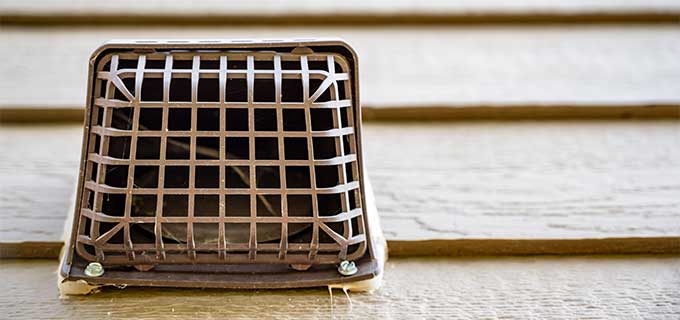
- Torn crawl-space vent screens or unsecured access doors
- Soil depressions or dug-out areas forming a den entrance
- Rub marks, tracks, or hair around frequent entry points
- Openings around pipes or utility lines at grade
- Easy access to pet food, birdseed, compost, or unsecured trash
- Evidence of repeat travel such as trampled vegetation and clear runways
Do not seal an opening if you suspect an animal is inside. Closing access prematurely can trap an opossum beneath a structure. We time exclusion and use one-way doors or humane eviction techniques to ensure animals exit before long-term barriers are installed.
Signsby Location
Where you find activity helps confirm an opossum issue and guides the right control strategy. Global Pest Management’s inspection focuses on how opossums access structures, where they den, and which attractants are keeping them nearby.
Location |
Signs to watch for |
How it relates to opossums |
|
Attic |
Heavy thumps, insulation disturbance, odors, droppings near access |
Less common but possible if there is easy climb access; confirm species before sealing |
|
Crawl space |
Scat, urine odor, torn vapor barrier, ground-level openings |
Frequent den sites; requires one-way eviction or trapping followed by secure screening |
|
Chimney |
Occasional scratching, debris at flue, nighttime activity |
Less typical; install and maintain chimney caps to prevent ground wildlife entry |
|
Garage or shed |
Displaced items, pet food theft, musky odor, tracks |
Foraging and short-term shelter; remove food sources and secure door gaps |
|
Roofline or vents |
Loose screens, easy climb routes, repeat travel signs |
Occasional use if access is convenient; confirm before repairs to avoid trapping |
|
Under a deck or porch |
Den opening, disturbed soil, nighttime movement, ammonia odor |
Most common den location; use eviction timing and install under-deck fencing or an apron barrier |
|
Yard or garden |
Tracks, scattered birdseed, raided compost, pet food attractant |
Food sources keep opossums returning; secure trash, remove feed at night, and limit ground access |
A professional opossum inspection is vital when activity occurs in hard-to-reach areas such as crawl spaces or beneath decks. Correct identification informs humane eviction, proper live-trapping and relocation rules, exclusion with durable barriers, and post-removal cleanup and deterrents.
Animal-SpecificClues
Wild animals leave distinct clues when they move, feed, or shelter around a property. Treat these indicators as leads that can point to opossum activity—but rely on a professional inspection to confirm the species and plan the proper solution.
Opossum Activity Patterns
Opossums are nocturnal scavengers that prefer easy shelter close to the ground. Typical signs include midnight rustling under a deck, slow shuffling footfalls, and a musky ammonia-like odor near a den site. You may find scattered pet food, tipped feeders, rummaged trash, or smudged paths where they repeatedly travel along fences and foundation edges. Tracks often show five pointed toes with an opposable “thumb”-like print on the rear foot.
Common den locations include voids beneath decks and porches, gaps under sheds, crawl spaces with unsecured vents, and piles of brush or stored lumber. Because opossums can wedge through low ground-level openings and may have dependent young in spring, safe eviction and exclusion are best handled by a professional.
Scat and Odor Clues
Opossum droppings are typically dark, cylindrical, and may be curled or tapered at the ends. They are larger than rodent pellets and often appear along fence lines, near den mouths, or beside feeding areas like pet bowls and compost bins. A stale, ammonia-like smell around a deck or shed can indicate an active den or frequent resting spot.
If you notice droppings in combination with nighttime activity and low entry gaps, avoid disturbing the area until it can be assessed. Improper cleanup can aerosolize bacteria; professional sanitation is recommended after animals are removed.
Ground Access and Entry Points
Unlike climbers that target rooflines, opossums favor ground-level opportunities. Look for fist-sized openings under steps, sagging lattice, eroded soil at the edge of a slab, or displaced screen on a crawl-space vent. You may also see a worn “runway” through mulch or grass leading to a shaded cavity.
Because multiple wild species can use similar openings, identification matters. A tailored plan—often involving a one-way eviction device or live-trap where legal, followed by an apron-style barrier—prevents reentry without harming the animal.
Food Attractants
Opossums key in on reliable food sources. Unsecured pet food, fallen birdseed, open compost, and access to chicken feed or eggs can draw them to your property. Trash rummaging, scattered kibble, and greasy prints on bin lids are common clues that an opossum is visiting at night.
Tracks and Trail Signs
In dust, soft soil, or on patios after rain, you may notice splayed toe marks with a distinct “thumb” impression on the rear foot. Trails usually hug walls, fences, or foundation lines. Paired with nighttime camera sightings and a low den opening, these track patterns strongly suggest opossum activity.
What Not to Assume
Roof damage, soffit tearing, and loud thumping are more typical of other species. If your signs point upward rather than at ground level, you may be dealing with a different animal. When in doubt, let a Global Pest professional confirm the species and design the correct opossum-focused solution.
When to Schedule an Inspection
Book an opossum inspection as soon as you notice ground-level den openings, nighttime movement under a deck, or repeat scavenging around pet food, compost, or poultry areas. Early action prevents animals from settling in and raising young beneath structures.
Contact Global Pest Management if you notice:
- Consistent nighttime noises under a deck, porch, shed, or in a crawl space
- Droppings with an ammonia-like odor near a low entry or den site
- Loose lattice, gaps at the foundation, torn vent screens, or eroded soil creating openings
- An opossum entering or leaving from under steps, patios, or sheds
- Wildlife confined in a garage, vent, or crawl space with no clear exit
- Repeated trash disturbance, stolen pet food, or activity near poultry coops
- Concerns about wildlife around children, pets, or outdoor food storage
- Signs that an animal may be nesting or has young below the structure
Global Pest Management provides free inspections and will identify whether opossums are involved, where they’re getting in, and the safest removal and exclusion steps to resolve the issue for good.
What to Do Before Help Arrives
Avoid approaching an opossum den, handling droppings, or blocking a ground-level opening. Cornered wildlife may bite, and sealing an exit with animals inside can cause property damage and odor problems.
Until a professional arrives:
- Keep children and pets away from suspected den sites and feeding areas.
- Do not attempt to catch or relocate an opossum, and never use poison.
- Avoid sealing gaps until a technician confirms the space is vacant or installs a one-way device.
- Do not disturb or dry-sweep droppings; wait for proper protective cleanup.
- Remove nightly attractants: bring pet food indoors, close trash tightly, and pick up fallen birdseed.
- Photograph tracks, den openings, droppings, or trail routes from a safe distance.
- Note when you hear activity (typically after dusk) and the exact locations.
- If you suspect damage to extension cords or exterior lighting, contact a licensed electrician.
Georgia property owners should also know that live-trapping and relocation of nuisance wildlife are regulated. Use a licensed trapper or consult the Georgia Department of Natural Resources before attempting any capture. Professional screening of crawl-space vents and proper under-deck barriers can prevent future entry.
Trust Global Pest Management
Global Pest Management specializes in humane, effective opossum control for North Georgia homes and businesses. We verify the species, map travel routes and den sites, and implement safe eviction, compliant live-trapping where allowed, and durable exclusions like under-deck fencing and apron-style barriers.
Don’t ignore nighttime shuffling, ground-level gaps, or an ammonia-like odor under your deck. Contact Global Pest Management today to schedule a free opossum inspection and receive a clear plan for removal, cleanup, and prevention that keeps animals out for good.